What I learnt as a research assistant at HKUST AANTC
Published:
I recently finished my position as a graduate research assistant at the AANTC lab at HKUST. I started in October 2024, right after graduating from my MSc. I want to write down what I learnt in this amazing job.
What I worked on
I applied computer vision to sport science. My work covered three parts:
- Pose reconstruction: applying deep learning pose recognition algorithms to reconstruct an athlete’s posture in 3D
- Apps: developing apps for data collection, for athlete training, and for coaches to use
- Hardware: developing sensor hardware for data collection
Coming from an MSc thesis on neural LiDAR 3D reconstruction, the 3D reconstruction part felt familiar. Building apps and hardware that real people had to use did not, and that is where most of the lessons below come from.
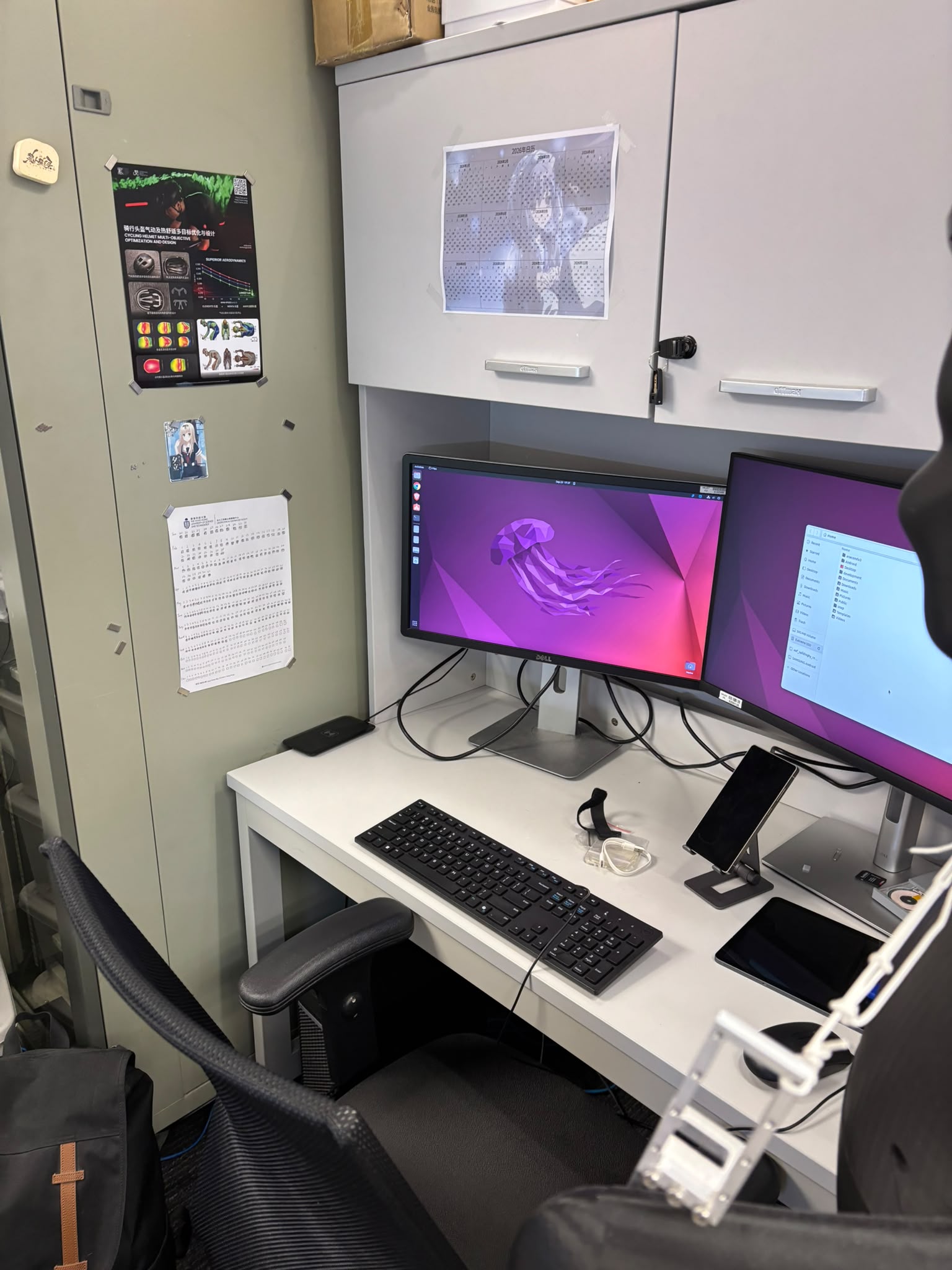
My workstation in the lab.
Lesson 1: Communication is key
At university, research mostly involves you and your supervisor. Real research often involves many more parties. In our case there were my colleagues, the funding providers, and the athletes and coaches who used what we built.
Each party has different expectations, and some of them are hard to see from the lab. For example, it was difficult to understand the athlete’s situation until we did on-water testing. Only then could we see what they actually needed from us. A technically good result does not help much if it is not what the other parties expected. Understanding what each party wants, and communicating well with them, is as important as the technical work itself.
Lesson 2: Real research is constrained
In an MSc project, the main constraint is the deadline. At work there are many more: you have limited time and limited space in the lab.
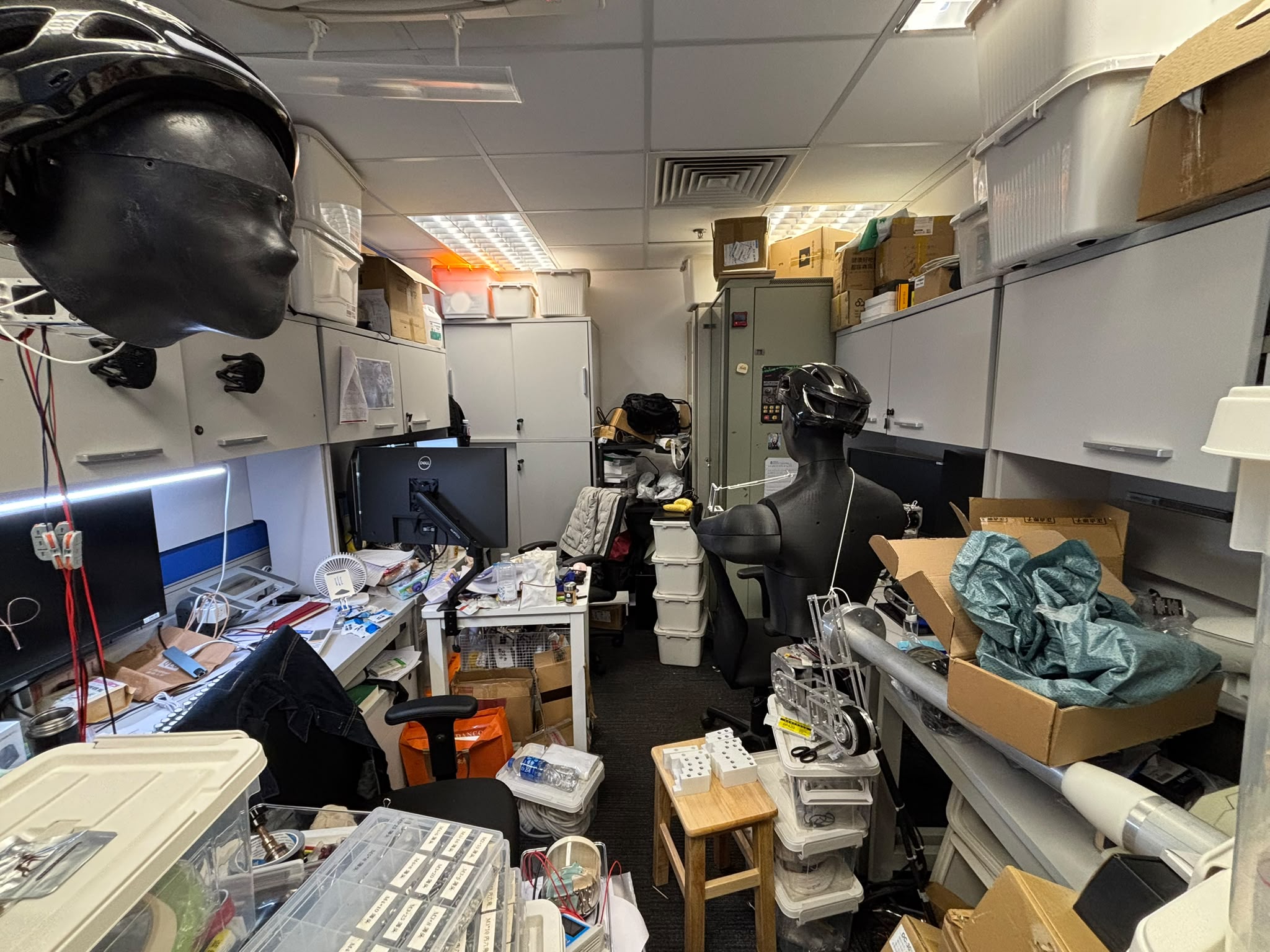
Our lab. Limited space was a very real constraint.
What I learnt is to understand these constraints early and be flexible within them, instead of designing the ideal solution first and finding out later that it does not fit.
Lesson 3: Don’t be too greedy
It is tempting to go straight for the most ambitious idea. But I found it is important to take one small step at a time. Each small step gives you a result you can show, and something the next step can build on.
There is also a human side to this. Ideas that are too crazy are difficult for others to accept, especially when, as in Lesson 1, many parties need to agree. A small, convincing step earns the trust you need for the bigger one.
Finally, I would like to thank Professor Zhou, Tom, HaoChen, ZiXiang, XiaoYi, and all my fellow AANTC members for the past two years. For their support, for the many discussions, for the opportunity to be part of this amazing project, and finally the delicious cake before I leave.